

Hydrogen sulfide (H2S) is a toxic and corrosive gas that creates persistent challenges during upstream oil and gas production. Sour gas may emerge from the reservoir at varying concentrations, while changes in pressure, water content, and production rates can affect treatment performance.
Effective removal methods minimize risks and ensure compliance with environmental standards, thereby guaranteeing smoother operations. Uncover the best ways to remove hydrogen sulfide from upstream activities that can help operators maintain productivity safely and sustainably.
The Upstream Challenges Associated With Hydrogen Sulfide
H₂S occurs naturally in many oil and gas reservoirs, particularly sour gas fields. It may appear in produced gas, crude oil, produced water, or mixed production streams.
Even low concentrations can irritate the eyes and respiratory system. Higher concentrations can cause rapid loss of consciousness and death, which makes gas detection, containment, ventilation, and treatment central parts of upstream safety programs.
H₂S also creates corrosion concerns when moisture is present. Sour service conditions can damage pipelines, valves, vessels, and other production equipment without suitable material selection and treatment controls.
Upstream operators face another challenge because H₂S levels may change as a well matures or production conditions shift. A treatment system must accommodate the expected sulfur load and account for potential spikes in concentration, while preventing untreated gas from reaching downstream equipment.
Methods for H2S Removal
Several physical separation methods can reduce H₂S in natural gas streams. Their suitability depends on stream composition, treatment targets, and the supporting equipment available at the production site.
Adsorption Through Regenerable Bed Systems
Physical adsorption systems use materials such as molecular sieves to attract and hold H₂S without a chemical reaction.
Operators can regenerate the media by changing the temperature or pressure, thereby releasing the captured compounds and preparing the bed for reuse. These systems can support continuous treatment when paired with multiple beds that alternate between adsorption and regeneration. However, regeneration requires supporting equipment and a plan for handling the concentrated H₂S stream released from the media.
Molecular sieve systems also depend on controlled inlet conditions. Water and other contaminants can compete for adsorption sites or degrade performance, potentially requiring pretreatment before the gas enters the bed.
Membrane Separation
Membrane-based technologies leverage selective permeability to separate H2S from hydrocarbon streams. Gas flows through engineered membranes that retain the heavier H2S molecules while allowing lighter hydrocarbons to pass. This approach reduces H2S concentration in natural gas to acceptable thresholds, facilitating its transport through pipelines.
Membrane systems work best for streams with well-defined flow rates and composition. To prevent fouling and maintain performance, operators often pretreat gas to remove particulate matter or liquid contaminants. With lower energy demands, membrane solutions offer efficient H2S removal, though their suitability depends on the specific gas composition.
Chemical Approaches to H2S Mitigation
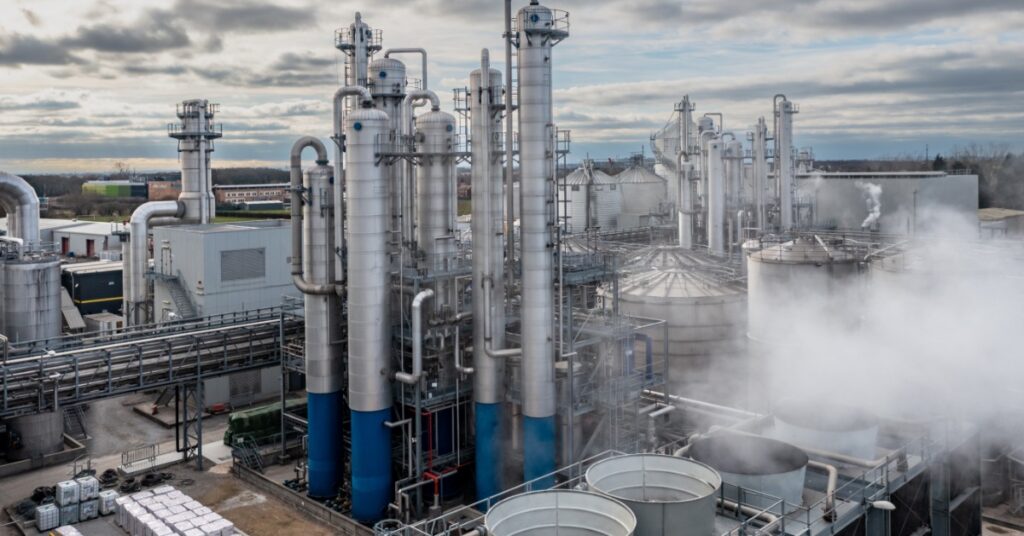
Chemical methods break down or neutralize H2S, providing high-efficiency removal rates for challenging operating conditions.
Amine-Based Gas Sweetening
Amine treating uses an aqueous amine solution to absorb H₂S and other acid gases from natural gas. The process sends sour gas through a contactor, where the amine removes the targeted contaminants.
A regeneration system heats the rich amine and separates the absorbed acid gases, allowing the solution to circulate back through the unit. This regeneration step requires heat, circulation equipment, process controls, and maintenance.
At Merichem Technologies, our AMINEX® process applies amine-based treatment through a structured contactor system. Operators evaluating amine treatment must consider inlet composition, flow stability, available utilities, acid gas handling, and the required outlet specification.
Triazine-Based Scavengers
Triazine scavengers offer a flexible option for targeted H₂S removal, particularly in applications with suitable sulfur loads and limited treatment infrastructure. Operators inject the liquid chemical into a pipeline or contact vessel, where it reacts with H₂S.
The reaction can form byproducts that create downstream concerns. These materials may contribute to fouling, deposits, separation difficulties, or disposal challenges, and downstream operators may restrict streams that contain residual triazine or its reaction products.
Triazine systems can support temporary treatment or selected upstream applications, though teams must account for chemical consumption and byproduct management when comparing long-term costs.
Sulfur Removal Adsorbents In Practice
Solid adsorbents provide another approach for H₂S removal from natural gas. Metal oxide-based media chemically react with H₂S and retain sulfur within a fixed bed.
These systems use vessels filled with solid media. Sour gas passes through the bed, where the active material removes H₂S before the treated stream moves to downstream equipment.
Fixed-bed systems require little day-to-day operator attention and may suit remote production sites. Their performance depends on proper vessel sizing, gas residence time, moisture conditions, sulfur loading, and media selection.
Understanding SULFURTRAP®
SULFURTRAP® is a solid, metal oxide-based adsorbent that removes H₂S and some light mercaptans from gas and liquid hydrocarbon streams. Operators use the media in fixed-bed vessel systems, which are designed around the stream’s flow rate, contaminant concentration, and treatment target.
For H₂S removal from natural gas, operators can use SULFURTRAP® for bulk treatment or as a polishing step that helps the stream meet a lower outlet specification. As sour gas flows through the vessel, the media chemically reacts with H₂S, trapping sulfur within the bed. The treated gas then exits the vessel for downstream processing or transportation.
Operators can use SULFURTRAP® for bulk H₂S removal or as a polishing step to help the gas meet lower outlet specifications. This method supports upstream sites that require reliable treatment without the need for the circulation equipment typical of regenerative liquid systems.
Managing H₂S Formation During Upstream Production
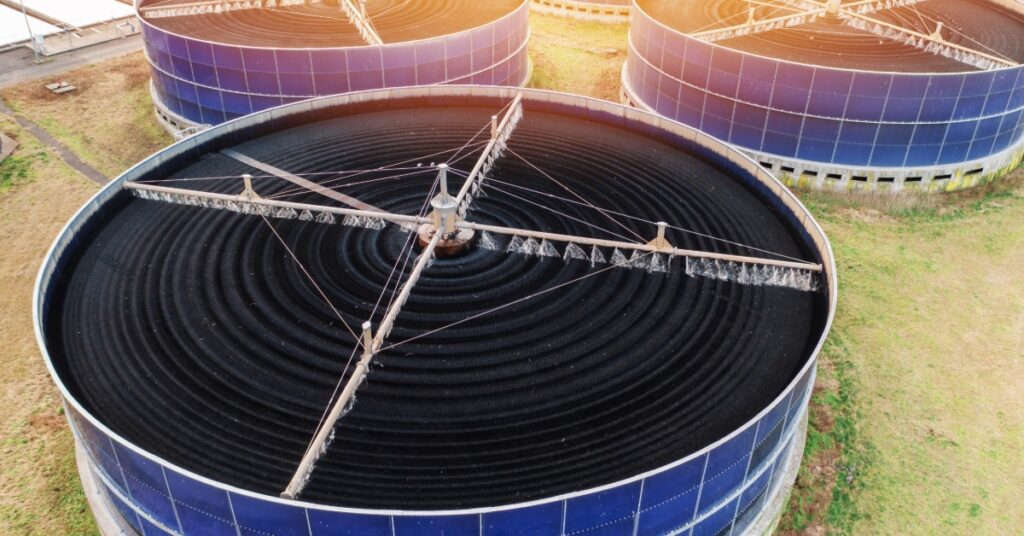
Removal equipment handles H₂S after it enters the production process. Operators may also control H₂S from microbial activity, such as sulfate-reducing bacteria, which can produce it under certain conditions.
When bacterial activity causes souring, biocides or other microbial controls are used. These require site-specific evaluation, considering reservoir conditions, water chemistry, chemical compatibility, environmental factors, and downstream effects.
Operational changes alone often can’t prevent naturally occurring H₂S from entering the gas stream, so most facilities need a treatment system sized for the sulfur load.
Factors That Guide Treatment Selection
Operators should compare H₂S treatment methods against the conditions at the production site. No single technology fits every upstream natural gas stream:
- Inlet and outlet H₂S concentrations
- Gas flow rate and expected fluctuations
- Water and hydrocarbon content
- Operating pressure and temperature
- Available utilities and site footprint
- Required operator involvement
- Byproduct and waste handling
- Downstream gas specifications
- Treatment cost over the system’s service life
Amine systems suit applications with ample gas volume, utilities, and acid gas infrastructure. Membranes support consistent streams with proper pretreatment.
Liquid scavengers offer flexible treatment but may impact long-term operation due to chemicals and byproducts. Solid adsorbents are suitable for remote sites or straightforward fixed-bed processes.
Supporting Reliable Upstream H₂S Removal
Operators consider various factors, such as operational scale, cost, environmental impact, and regulatory requirements, when choosing methods for removing hydrogen sulfide in upstream activities.
A properly matched H₂S removal system ensures personnel safety, reduces corrosion, and helps natural gas meet processing or transportation standards. By reviewing the entire operating profile, teams can select a treatment approach that ensures reliable performance throughout the production cycle.
Merichem Technologies provides engineered technologies and solid adsorbents for sulfur removal across upstream gas applications. Contact the Merichem Technologies team to discuss the stream conditions and treatment goals for your operation.