MERICAT II
Sweetening heavy mercaptans in kerosene/jet fuel, middle-distillate, and condensate streams
Caustic Sweetening of Mercaptans
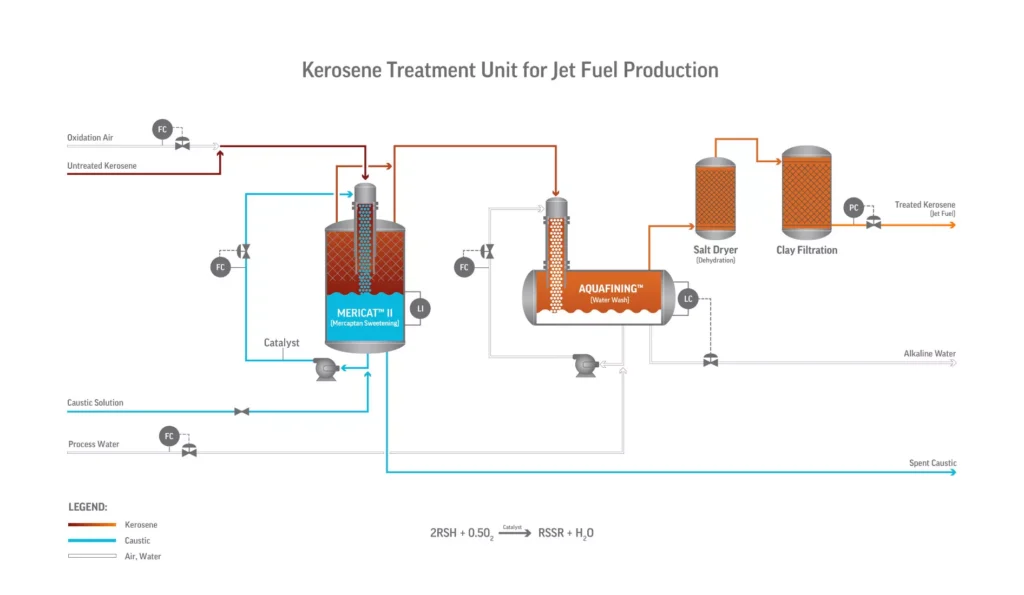
MERICAT™ II technology is a proven solution for sweetening heavy mercaptans contained in kerosene, middle-distillate and condensate.
When used with Merichem Technologies’ proprietary FIBER FILM® Contactor high-efficiency mass-transfer device, these technologies reduce the CAPEX and space requirements associated with conventional solutions.
Advantages
Used with a catalyzed carbon bed, this technology is typically applicable to the treatment of kerosene, jet fuel and middle-distillate streams.
- Sweetens heavy mercaptans.
- Uses caustic paired with a catalyst impregnated carbon bed to ensure product specifications can be met.
- Often paired with NAPFINING for removal of naphthenic acids as well as AQUAFINING to scrub sodium and surfactants; uses salt and clay treatment for final polishing.
- Used in our up-flow configuration, a single MERICAT II vessel with its internal FIBER FILM® Contactor can remove low-to-moderate levels of naphthenic acids and sweeten RSH all in the same vessel.
- For streams with very low levels of naphthenic acids, our down-flow configuration offers significant savings with a simpler design that may only require a catalyzed carbon bed. for RSH sweetening.
Applications
- Kerosene
- Middle-Distillate Treatment
- Condensates
How It Works
Developed by Merichem Technologies, our proprietary FIBER FILM Contactor device features ultra-thin, aqueous-wetted fibers that increase the surface area, resulting in significantly greater efficiency of conversion or mass transfer—with little to no emulsification, carryover or high-pressure drop.


Established Performance
Merichem has developed proven technologies for the oil and gas industry for over half a century. We have built a global reputation for expertise in caustic treatment technology and service solutions, delivered with dedicated and responsive service to our customers.
Extensive Capabilities
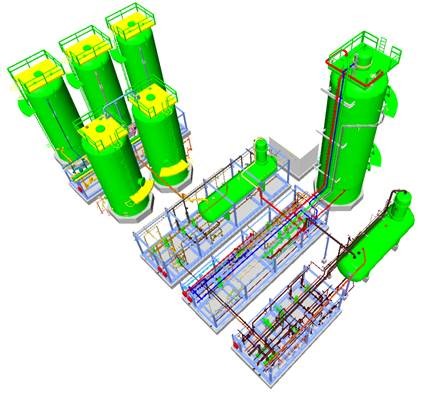
We are a full-service solution provider. Whether it’s licensing technology, guidance, design, engineering, fabrication, testing or implementation, Merichem Technologies has the resources to fill in your blanks.
Proven Flexibility, Global Reach
All around the world, Merichem Technologies has helped customers address some of their most challenging treatment problems with expertise and tenacity.
We have licensed more than 50 MERICAT™ II units worldwide
Stream Types

FFC Plus™ Technology

Frequently Asked Questions
What is MERICAT II used for?
MERICAT II sweetens light, medium and some heavy mercaptans using a catalyzed carbon bed. While sweetening RSH, MERICAT II also removes H2S and naphthenic acids since caustic is present. This technology is typically applicable to the treatment of kerosene and jet fuel. If a significant amount of naphthenic acid is present, an upstream caustic wash using NAPFINING is required.
How difficult is it to load or unload the carbon from a MERICAT II vessel?
Merichem supplied carbon may be loaded from the top of the vessel using a hopper or super sacks through a sock extending into the vessel. Spent carbon is removed by vacuum truck from the top or side vessel manways.
Can my unit be run in downflow?
Yes. Merichem has designed MERICAT II to operate in either upflow or downflow mode depending on the specific application.
How often do you have to recausticize and hot water wash the carbon bed for MERICAT II?
Recausticizing is recommended to be done at least once per month and can be completed without a unit shutdown or affecting product quality. The catalyst bed must be alkalinized with caustic so that it becomes an active oxidizing environment for the sweetening of mercaptans. The unit is hot water washed when on-spec product cannot be attained, and adjustments of the operating variables (such as air rate and recausticization) do not improve catalyst activity. Hot water washing removes impurities that have plugged the carbon pores and rendered the catalyst less active. Hot water washing also reduces the dP across the bed, which should not exceed 10 psi.